Showing posts with label water zones. Show all posts

Monday, October 3, 2011

Xeriscape Post San Antonio - Part Three

This is part three of the tour of the San Antonio Botanical Gardens Xeriscape Demonstration Gardens. Part one dealt with the Manicured Xeriscape Garden and a typical traditional American Garden: Part One.
Part two demonstrates my favorite example of xeriscape - The Hill Country Landscape Garden: Part Two.
Click on those links to read those previous posts.
After reading the comments on the first post, Pam Penick from Digging fame left me a link of a past visit to these gardens by her and other fellow Austin bloggers. I will leave a link back here. Watersaver Lane
It was cool to go back and look at these gardens when they were "young". They have matured since this 2007 post. Also she gave me the name of the series of gardens, Watersaver Lane. Thank you Pam!

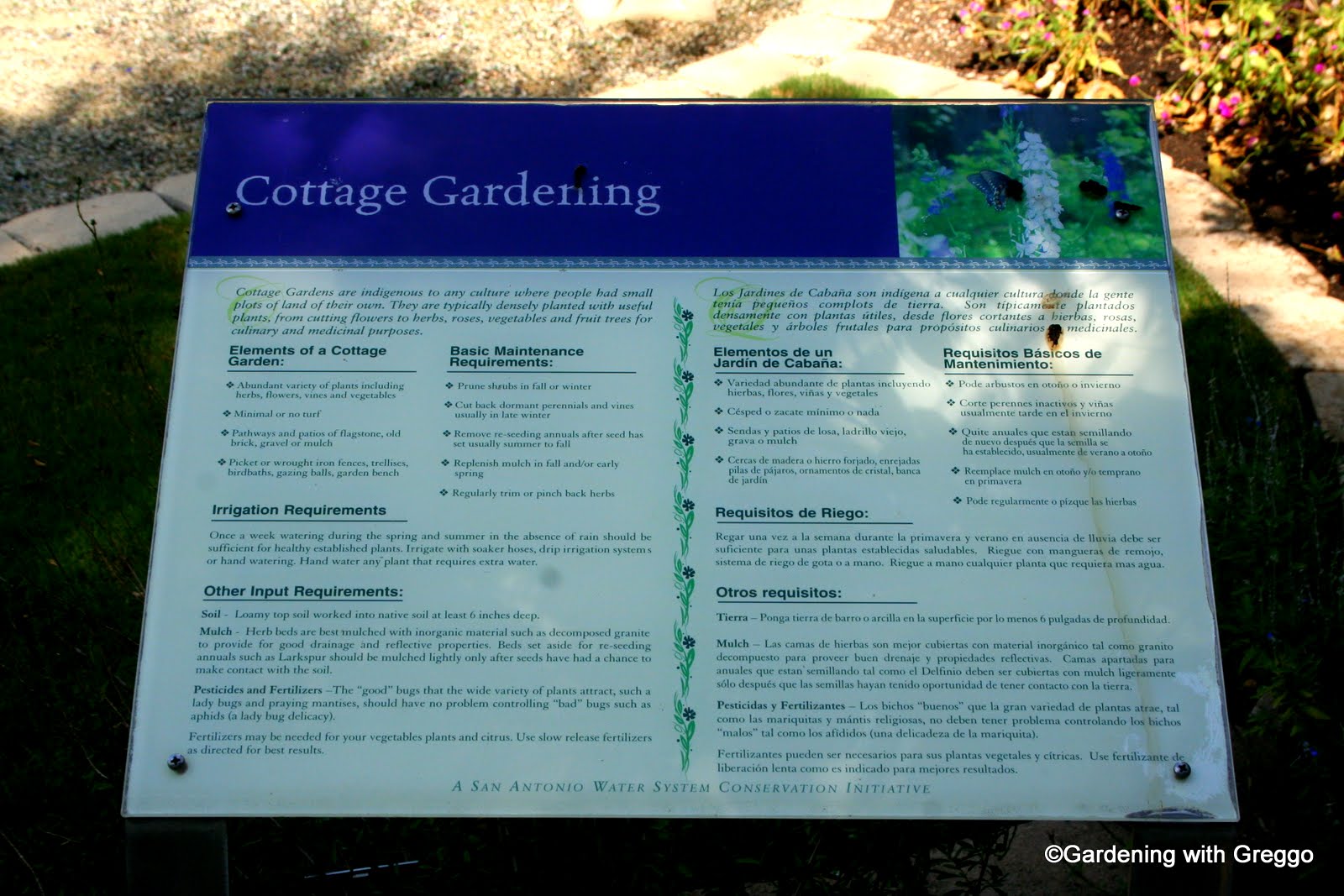
The fourth garden is the cottage garden: photo above. As you can see there is a nice transition from the Hill Country motif to a cottage garden motif. The cedar rail fence delineates the two very well. Also the Datura blends with both gardens.
This is a true cottage garden. Seedlings come up  and grow and are left to mature. Woah, do they grow. This is garden is definelty full.

Click on above image to read design elements, water requirements and other input requirements.
The signage fence design consisted of uniquely formed depressed pickets.
 The pathway materials consisted of decomposed granite with recycled and tumbled (to remove sharp edges) glass. Austin bloggers are very familiar with this mulch. Edging material consists of preformed limestone looking concrete uniform brick.
Flowering Pear in background with perennial salvia and bedding annuals.
Typical cottage garden stalwarts positioned in water zones common to their own water requirements. Heirloom roses, mexican mint marigold, artemesia, salvia greggi, shrimp plant and daylilly with Indian Hawthorne hedge among others. And of course reseeding annuals plan a part. An arbor over the front of the "home" distinguishes this garden theme, covered with Confederate jasmine I believe. I can imagine how much color there would be here in the spring and fall. Accessories adorn the theme.
By using plants with the same irrigation requirements we could all conserve much needed water resources. The next post will conclude my visit to Watersaver Lane, click on this link along with Pam's link above to look at more information about these "fun" demonstration themed xeriscape gardens. As Les from A Tidewater Garden put it: Xeriscape is more than Yucca and a sea of gravel, it can present color, texture, variety, and good design. David from The Desert Edge comments often about good and bad xeriscape designed gardens, you may want to visit his New Mexico garden blog site to learn more.
Onward through the fog! lol.


Wednesday, September 28, 2011

Xeriscape Post-Again You Ask?

I'm sure some of you remember my posts this summer about the Xeriscape demonstration gardens in Colorado Springs. I went on and on about the "rules", points, suggestions, etc., etc. etc. Well for the past two months I've been trying to put together another xeriscape post from the San Antonio Botanical Gardens. The staff there has put together some unique demonstration gardens. They are well planned and installed exhibitions of "themed" gardens. I will start with the  Manicured Xeriscape Landscape Demonstration Garden.
On every garden there is signage explaining the details and management tips on having that type of garden. There is also signage giving the viewer the ability to call a number and listen to a recorded message explaining details of the garden. The signs were pretty dirty with droppings, as most of the staff was too busy hand watering due to the mega drought and probably not able to find much time to do housekeeping. Click on the images to enlarge.
The photo below is a wide angle view of the Manicured Xeriscape. Excuse me about this photo as it was a 108 and just a little bit sunny. The sign from the first photo is the same one on top of the small section of fence. Each garden has a sign with a uniquely designed section of fence below it. This one has a cattle panel section with a contemporary style.
Most of the turfgrass and plants are labeled. The turfgrass is zoysia, and yes that is jasmine ground cover. Many of you probably ask: how can that be xeriscape? Remember one principle is to put like plants together according to their water usage in the same zone. This example is a manicured garden for those who want to save a little more water (Zoysia lawn compared to a Saint Augustine lawn) and jasmine ground cover when once established can take some drought. Also you can allow Zoysia to go dormant as it is a warm season grass and it will recover when it rains. Rain? Well maybe. Once a week irrigation keeps Zoysia green and it can take partial shade. Also this garden has herbaceous perennials planted instead of annuals. Notice the architectural style of the small building. Each garden has their own unique building style.

 Decomposed granite is typical of the pathways leading to the different gardens. DG leads up to this building above with hardscape brick near the stoop. Wouldn't you call this manicured? I believe that is an existing live oak on the left. Shade is an important feature in this garden. Also you are viewing the sign and fence detail on the right which is an example of the next garden.

The traditional lawn. This garden is an example of the traditional American landscape. This is not a xeriscape garden.
I suppose this is not what to do. lol. Click to view the elements of the landscape and maintenance requirements in this region. Notice the high maintnance clipped Photinia foundation planting, Crepe Myrtle in the background, clipped box hedge, Saint Augustine turfgrass and annuals. It's actually a nice looking garden but uses more water to keep it green.
I suppose the only thing missing in this region is a Arizona Ash tree. In other parts of the country these plants would be interchanged with privet, large juniper, bluegrass or fescue turfgrass. The next four gardens will be posted in coming days. These will include The Texas Hill Country garden, the Cottage Garden, the Wildscape garden and the Spanish Courtyard Garden. Remember this tour was in late July this summer, so judge them on how well they look in this drought and what type of plants are being used and how much maintenance and water is being applied to "look" good.


Sunday, July 10, 2011

In Conclusion: Xeriscape Demo Garden Part Three

 This is the third and final part of our visit to the Xeriscape Demonstration Garden in Colorado Springs. In review and to keep things short this post will be primarily photos. 
The Seven Principles of Xeriscape : 1. Plan and Design  2. Soil Amendment  3. Efficient Irrigation 4. Appropriate plant and zone selection 5. Mulch  6. Alternative turf  7. Maintenance.

In Greek Xeri means dry or dry enviroment; Xeric means relating or adapted to an extremely dry habitat. Succulents such as cacti, aloes, and agaves are xeric plants.

Reviewing the many comments I've received there seems to be a little confusion on what xeriscape means to each reader. I believe we all use many of the same principles in our "non" xeriscape gardens. So I am going out on a limb and choose principle #4 : appropriate plant and zone selection as being the best definition of Xeriscape. By planting plants with the same light/irrigation zone needs, we create an area that is more efficient in water use. For example, if we plant a high water use plant like the Ajuga with a low water use plant like Yucca in the same bed we have to irrigate the bed heavily to keep the ajuga alive and thus over watering the yucca excessively. Thus using more water than necessary. I hope this explains the principle better.
Xeriscape Rock Garden
Solar Powered Water Garden
Sorry the focus is off.
No to Low Water Zone/Full Sun
No/Low Water Zone/Full Sun-Alternative Lawn Zone-Buffalo/Blue Grama Grass
Yucca and Penstemon
Low Water Zone
Had to add a photo of a project I completed when I lived in the Springs in 2002. Xeriscape principles were used and many existing plants were left such as Pinyon Pine and Juniper. Initially there were only rotted railroad ties and noxious weeds and no rock. Needless to say we moved a few tons of boulders.
My son and I say adios.

Monday, July 4, 2011

Xeriscape Demonstration Garden - Part 1

Fallugia paradoxa-Apache Plume

Apache plume shows her positive side, her white blooms and silky swanky seed heads. What more could you want, maybe a little more decorative foliage? Donna from GTGW made a nice post this week on context. It's true the above photo is primarily focused on the blooms and seed-heads. However the photo really doesn't show the plant in it's full form. But, man!!!! Is that gorgeous or what?

This post is primarily focused on my trip to the Colorado Springs utilities demonstration garden near Garden of the Gods. I got this editorial off the gardenvisit web site:


The Colorado Springs Utilities Xeriscape Garden is designed to demonstrate the seven principles of Xeriscape in a wide variety of designs. The garden incorporates many different gardens styles that are arranged by water requirement so visitors can get a good idea of what styles can be achieved and what plants will thrive with different amounts of water. The garden displays more than 500 varieties of trees, shrubs, grasses, perennials, biennials and annuals that grow well in the Colorado Springs area. 
Throughout the garden there are several stations explaining the seven principles of xeriscape. 
1. Plan and Design  2. Soil Amendment  3. Efficient Irrigation 4. Appropriate plant and zone selection 5. Mulch  6. Alternative turf  7. Maintenance.  Xeriscape programs were initiated to save water in areas that are beginning to run out of water resources and need to conserve.

I really don't want to turn this into an encyclopedia post so I will leave a link for more info if you want to be more informed. Personally the main xeriscape principle for me is proper plant and water/light zone selection.

These three photos were taken 'outside' the main garden, by the parking lot and water utilities office.
The garden is broken into light/water zones and labeled as such. These plants are in the Moderate Water Zone. Most everything is labeled well and explanatory
The garden is located just above the Garden of the Gods park, what a background for a garden!
 Does that wet you appetite? More on Part II