Showing posts with label Tall Grass Praire. Show all posts

Tuesday, June 5, 2012

Recovery II

Mollie the wonder dog and I returned to our land of treasure to search for the elusive Prairie Larkspur seed. Some of my fellow garden bloggers have requested seed and so our work begins. Read about the previous treasure hunt linked here: Recovery.
In a matter of days the vacant lot had changed from a lush cool season grass prairie(vacant lot) of brome grass to a more refined warm season prairie with summer flowering forbs and grasses. The brome grass seed heads have turned to a golden brown with the grey and green foliage of the summer forbs and sub-shrubs. 
Catclaw sensitive plant-Mimosa quadrivalvis and Downy Bromegrass-Bromus tectorum.
Amorpha canescens-Leadplant and Downy Bromegrass-Bromus tectorum.
Asclepias syriaca-Common Milkweed(best guess)?Apocynum cannabinum-Dogbane/Indian Hemp
Common milkweed seed.
Foxtail Barley-Hordeum jubatum
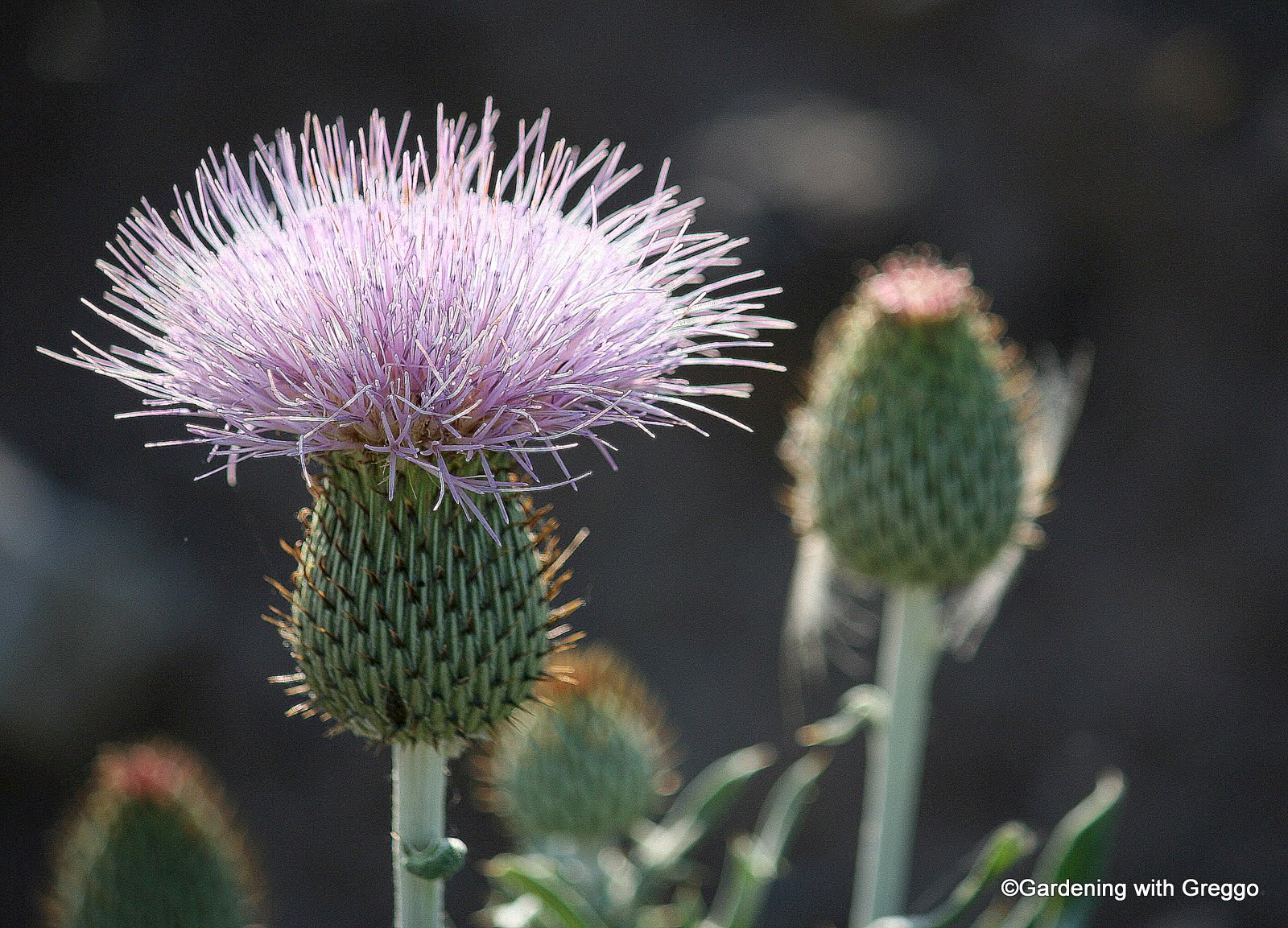
Waxy Leave Thistle-Cirsium undulatum
Whoolly Verbena-Verbena stricta(I think)
Whoops! Got a little sidetracked. I found the Prairie Larkspar! I had to review the photos from the previous post to locate the exact location. Original Photos:
There's the plants previously near the brush pile.
 A few days later......see it?
 It's the dead stick on the left side. ha ha. Nothing, no blooms, and no seedpods. While I was there I noticed a caterpillar. Need to get a photo of that.
Cool, but what's that next to it? A seedpod! I only got one seed. Bummer. Looks like my treasure hunt came up a little short. Guess I'll have to place closer attention next spring. Sorry folks.


Tuesday, July 26, 2011

Wildflower Wednesday-Kansas Natives

Cindy and I attended a Cowley County Native Plant tour in late June of this year. The tour took place on the 9000 acre Snyder Ranch, a tall grass prairie maintained for forage and foliage in the Flint Hills area of south-central to eastern Kansas.
According to our tour guide, this ranch is one of the only undisturbed tall grass prairies in the world. I think the word tall grass is what makes it unique. He compared it to the Amazon as a one of a kind place. Pretty strong comparisons. The owners have had the ranch passed on through generations. Native legumes are left to fix nitrogen for the grasses and native plants are left accordingly. The only herbicides applied are spot treated to eradicate some noxious forms of Lespedeza. The ranch land is only grazed from May to July 1, and never overgrazed. Controlled burning occurs every 3rd year, and less often during droughts.
 The area consists of rolling hills with stone outcrops of limestone and flint. The soil is very shallow and mixed with rock, therefore very difficult to cultivate. Most upland trees are some type of white oak. Shrubs include sumac, wild plum, and some baptisa.
Psoralidium tenuiflorum-Wild Alfafa is very prevalent on these ranchlands- a legume.
 Achillea millefolium-Western yarrow interspersed with bluestem and wild alfalfa.
Ratibida columnifera- Prairie Coneflower early
Echinacea angustifolia- Black Sampson coneflower
Amorpha canescens - Leadplant
Dalea purpurea-Purple Prairie Clover
Mimosa quadrivalvis  L.  var. nuttallii - Catclaw Sensitive Briar
Asclepias tuberosa-Butterfly Weed with Quercus
Bouquet made from native plant blooms given to my wife as a prize drawing.


Think Native! Go visit Gail @ Clay and Limestone to visit others in the world growing with Natives.