Saturday, October 15, 2011

Cool and Crisp - GBBD October 2011

Cool and Crisp.  I suppose that would be a good description of my garden.
Salvia fairnacea-Mealy Blue Sage and Colias eurytheme? Orange sulphur

Cool and Crisp. As there is a definite drop in temperature. Cool and Crisp. As the blues in the garden lower the color temperatures of summer.


 Salvia guaranitica 'Black and Blue'

Cool and Crisp. As the newly arisen Monarch stretches her wings to dry in the cool fall days of a Kansas afternoon.
 
Asclepias-Milkweed with Danaus plexippus-Monarch. Can anyone identify this species of milkweed?
Cool and Crispy. As the Goldenrod begins to mature and dry to seedling stage.
 

Solidago rugosa-Goldenrod 'fireworks' ? with Strymon-Hairstreak
Cool and Aromatic. Globe Basil-Ocimum with Gray Hairstreak-Strymon melinus
(above)


Cool and Blue. Nepeta faasseni-'Walkers Low' Catmint with Sulphur (above)


Cool and Blue(stem) hellstrip


Get Cool this Fall @ May Dreams Garden - Garden Bloggers Bloom Day.
Visit all the other cool dudes and their fabulous fall blooms worldwide.


Monday, October 10, 2011

Xeriscape Post San Antonio- Part Four-Conclusion

In Review:
This is part four and final post of the tour of the San Antonio Botanical Gardens Xeriscape Demonstration Gardens. Part one dealt with the Manicured Xeriscape Garden and a typical traditional American Garden: Click to view Part One.
Part two demonstrates my favorite example of xeriscape - The Hill Country Landscape Garden:Click to view Part Two.
Part three demonstrated the cottage garden xeriscape- Click link to view Part three

After reading the comments on the first post Pam Penick from Digging fame left me a link of a past visit to these gardens by her and other fellow Austin bloggers. I will leave a link back here. Watersaver Lane
It was cool to go back and look at these gardens when they were "young". They have matured since this 2007 post. Also she gave me the name of the series of gardens, Watersaver Lane. Thank you Pam!

Part four is a tour of the Wildlife Landscape and the Spanish Courtyard Garden:
Click on image to enlarge and read Elements, Maintenance requirements, irrigation requirements, and other inputs.
The wildscape landscape is designed to attract wildlife with nectar plants and plants that produce seeds. Again decomposed granite is used for the pathway. A limestone field stone wall is used to delineate this garden from the cottage garden.
 The shade tree is a Red Oak, plenty of acorns for the squirrels I suppose and Salvia for hummingbirds.

The last Garden in the series on Watersaver Lane is The Spanish Courtyard Garden:
.This garden definitely is on the ornamental side. Not my cup of tea, but there is a lot of spanish architecture in San Antonio.
Palms, succulents, Caesalpinia pulcherima - Pride of Barbados, Sago Palm and Mediterrean Fan Palm all placed in like irrigation zones. All with tropical textures and colors.
That will conclude the tour and series. I hope you enjoyed them as much as I did when I visited them. Adios, amigos.

Friday, October 7, 2011

Repose-Black on White

Dona with Garden Talk-Garden Walk's word for Wednesday is Repose.
Be with the word here:Repose
Photos taken at the International Lily Gardens in San Angelo, Texas.
Repose
Photos taken at the wedding of my son at the Cristoval Winery near San Angelo, Texas.

Monday, October 3, 2011

Xeriscape Post San Antonio - Part Three

This is part three of the tour of the San Antonio Botanical Gardens Xeriscape Demonstration Gardens. Part one dealt with the Manicured Xeriscape Garden and a typical traditional American Garden: Part One.
Part two demonstrates my favorite example of xeriscape - The Hill Country Landscape Garden: Part Two.
Click on those links to read those previous posts.
After reading the comments on the first post, Pam Penick from Digging fame left me a link of a past visit to these gardens by her and other fellow Austin bloggers. I will leave a link back here. Watersaver Lane
It was cool to go back and look at these gardens when they were "young". They have matured since this 2007 post. Also she gave me the name of the series of gardens, Watersaver Lane. Thank you Pam!

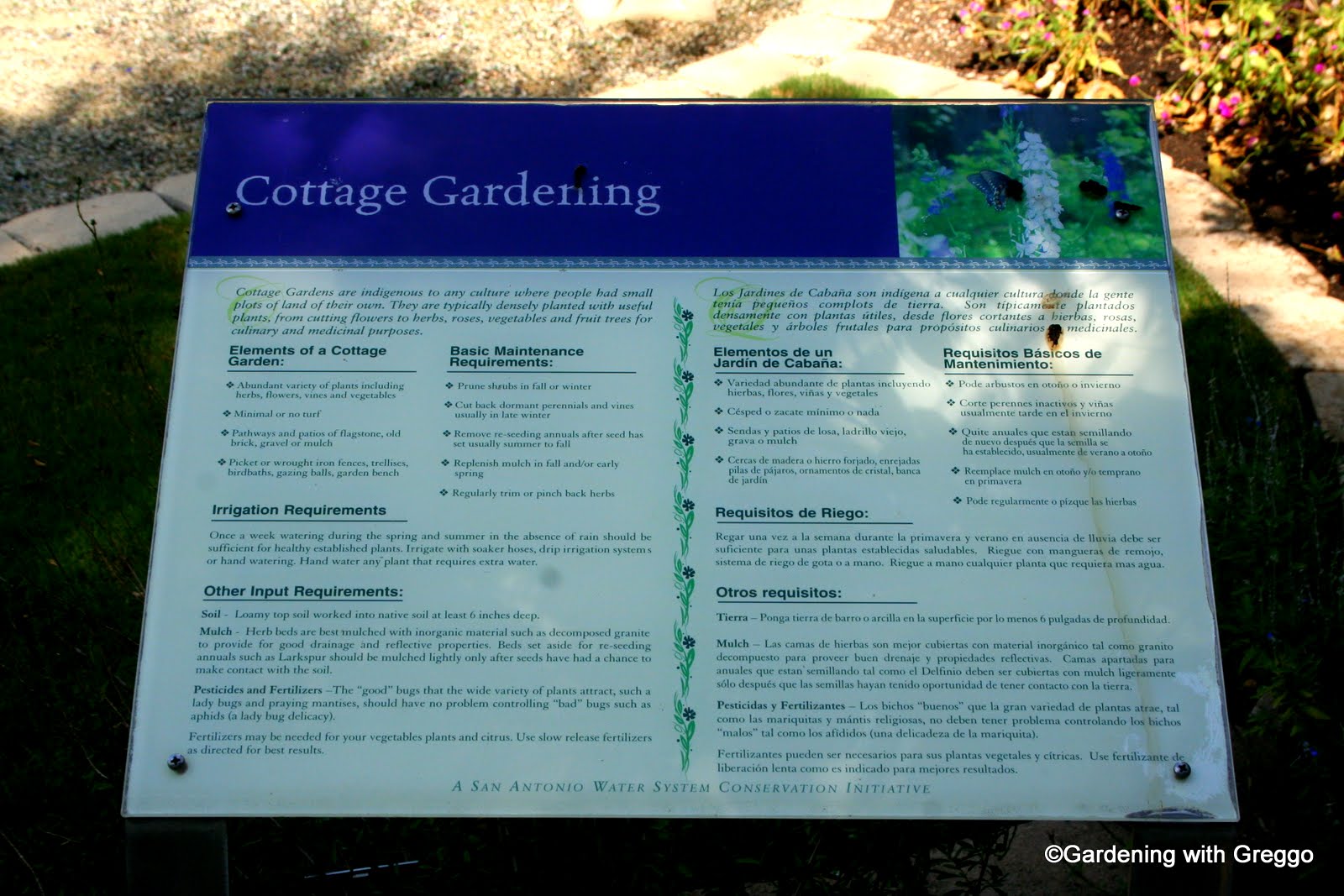
The fourth garden is the cottage garden: photo above. As you can see there is a nice transition from the Hill Country motif to a cottage garden motif. The cedar rail fence delineates the two very well. Also the Datura blends with both gardens.
This is a true cottage garden. Seedlings come up  and grow and are left to mature. Woah, do they grow. This is garden is definelty full.

Click on above image to read design elements, water requirements and other input requirements.
The signage fence design consisted of uniquely formed depressed pickets.
 The pathway materials consisted of decomposed granite with recycled and tumbled (to remove sharp edges) glass. Austin bloggers are very familiar with this mulch. Edging material consists of preformed limestone looking concrete uniform brick.
Flowering Pear in background with perennial salvia and bedding annuals.
Typical cottage garden stalwarts positioned in water zones common to their own water requirements. Heirloom roses, mexican mint marigold, artemesia, salvia greggi, shrimp plant and daylilly with Indian Hawthorne hedge among others. And of course reseeding annuals plan a part. An arbor over the front of the "home" distinguishes this garden theme, covered with Confederate jasmine I believe. I can imagine how much color there would be here in the spring and fall. Accessories adorn the theme.
By using plants with the same irrigation requirements we could all conserve much needed water resources. The next post will conclude my visit to Watersaver Lane, click on this link along with Pam's link above to look at more information about these "fun" demonstration themed xeriscape gardens. As Les from A Tidewater Garden put it: Xeriscape is more than Yucca and a sea of gravel, it can present color, texture, variety, and good design. David from The Desert Edge comments often about good and bad xeriscape designed gardens, you may want to visit his New Mexico garden blog site to learn more.
Onward through the fog! lol.


Thursday, September 29, 2011

Xeriscape Post-Again You Ask? Part Two

This is part two of my observations of the xeriscape gardens at the San Antonio Botanical Gardens in July of this year. The previous post explained the first two gardens, the Manicured xeriscape and the traditional non-xeriscape garden. If you would like to review these here is a link: xeriscape post again? part one.

This post entry will explain the third demonstration garden: The Hill Country Landscape. The Hill Country Garden is definitely my favorite, as I wish we could grow some of these plants here. As with the other gardens it has its own unique style and design features as defined by the signage. Click on image to read.
Below is the beginning of the garden, leaving the traditional garden along the decomposed granite path.
Immediately the landscape and composition change from traditional manicured to "Hill Country native" Texas style. Cut native limestone border edging delineates the two gardens. Juniperus ashei (Texas Cedar is a common name) posts compromise the sign fence structure, a nice rustic look. Spineless prickly pear, limestone outcropping boulders, Cercis canadensis var. texensis (Texas Redbud a similar cultivar to Eastern Redbud but more adaptable to the thin calcareous soils of the Texas Hill Country, it also has wavy, leathery leaves to inhibit transpiration and is usually more shrubby and multi-stemmed), Molinia (Beargass) I believe or Mulenbergia compromise the plantings in the above photos.

To the right of the signage is the entrance to the garden. Limestone outcrops and edging. DG pathway with native xeric plants and rustic cedar logs. An inviting entrance indeed.
The right side of the garden includes a wonderfully sculpted mesquite tree with salvia and I believe skullcap. A cedar rail fence delineates this garden from the next: the cottage garden.
But we will stay here a little longer as it is my favorite. View from further out below.
I suppose this isn't everyone's cup of tea. Many would feel it's over grown and messy. Not exactly a traditional suburban example is it?
I believe the plant above is a Grey Sotol (Dasylirion wheeleri) or some form of Dasylirion. It might jump out and bite you here however.
Red yucca, Stipa(mexican feather grass), sage, and prickly pear looking out from building.
Arizona Cypress next to building along with Dwarf Youpon Holly and Turks cap I believe in above photo.
Mahonia trifoliolata(Agarita)foreground with Spineless Prickly Pear and Leucophyllum frutescens(Texas sage,Cenzio).
Unique texture contrast these two. I apologize for not having more photos. However, I think you can understand the jist of this garden. A very small area of turf grass and low water use native plants. Most of these plants have the grayish green color and texture common to xeric plants. The next post will be on the Cottage Garden. Onward.