Friday, November 2, 2012

Annual Wildflower Weekend Day One

As I introduced the subject of the Annual Wildflower Weekend in my home town of Winfield Kansas in a previous post, I would like to add a few more details of the occasion.
 Snyder Ranch - Dexter , Kansas
But first a few words about the society from their web page: The Kansas Native Plant Society (KNPS) encourages awareness and appreciation of the native plants of Kansas in their habitats and in our landscapes by promoting education, stewardship, and scientific knowledge. More information here. The society is made up of plant geeks! Why else do you think I joined? Upon joining this summer I also joined the KNPS Google Group which lists member and other naive plant happenings such as workdays, collecting seeds for renovating prairies or reclamation projects, workshops, prairie tours, and other fun stuff. It's great to socialize with people who have the same interests. Initially I mainly joined just to attend the prairie tours offered during the Wildflower Weekend. A month later I received a very professionally created agenda for the meeting and tours and Friday the 21st of September was the beginning of the tours.
The first tour was a overgrazed drought ridden cow pasture with the majority of the 'botanizing' done along the county graveled road and dry creek 'draw'. We initially meet at our local Southwestern University parking lot and had a convoy to a local members ranch house near the pasture.

The first plant the group identified was Oxalis violacea-Violet wood sorrel, violet oxalis.
Flowers:April-June, occasionally again in September.
Height: 4-8"
Description: Forbs, perennial. Flowering stalks 4-8 in. tall, arising from bulbs.
Comments: The leaflets fold and droop, and the flowers close at night or on very overcast days. Several Great Plains tribes fed their horses the crushed bulbs to enhance their speed. Pioneers were said to have made pies of wood sorrel leaves when gooseberries or rhubarb were not available. *
Hilariously we as a group had this diminutive plant surrounded viewing its splendor when an unaware bystander walked right on top of it. Bye.

From there we basically splintered off and wandered around like zombies, under the influence of this  Kansas prairie. This overgrazed area consisted mainly of Amphiachyris dracunculoides -Annual broomweed and Liatris punctata-Dotted gayfeather, button snakeroot , or blazing star.
Flowers:August-September
Height: 6-30 inches.
Comments:This species was called 'crow foot' by some Native American tribes, because crows were often observed eating the roots in the fall. Dotted gayfeather produces a taproot that can reach a depth of 15 ft., making it quite drought resistant. Native Americans utilized the roots as a food source and to make a tea used to treat stomachaches. *

Next Eryngium leavenworthii-Leavenworth eryngo photographed with of leaf of Silphium laciniatum-Compass plant.

Flowers: July-September
Height: 1-3 ft.
Comments: At first glance this plant resembles a thistle, but is actually a member of the Parsley Family. This speicies is named for its discoverer, Melines Conklin Leavenworth (1796-1862), an explorer, army surgeon, and botanist.*

That concludes part one of day one. Part two will deal with the forbs in the dry creek bed in the 'draw' with some interesting Joe Pye.

*All plant data derived from 'Wildflowers and Grasses of Kansas' by Michael J Haddock, current president elect of the Kansas Native Plant Society.




Sunday, October 28, 2012

A Little Color

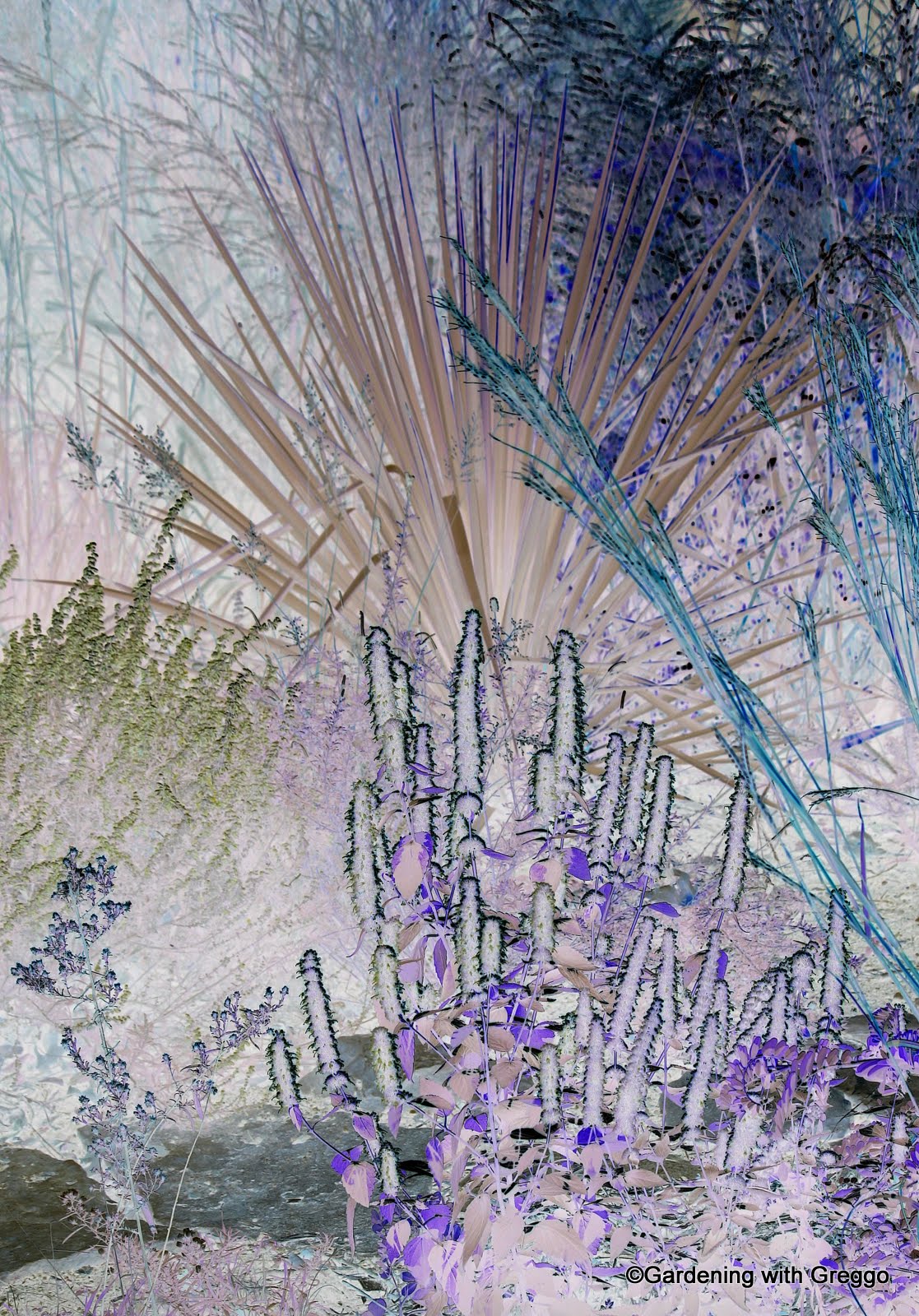
No I'm not with Lucy in the Sky. I'm just being a little colorful today, messing around with Picasa. From the praire garden, Agastache, Yuccs rigida, Adropogon, Perovskia, and Panicum.

Monday, October 15, 2012

GBBD 10.12

It's that time again ladies and gentlemen, Garden Bloggers Bloom Day. As many of you know Carol at May Dream Gardens sponsors this popular meme every month. Be there are be square.
Fall is here in south central Kansas which is still recovering from a drought. I've had to squeeze my irrigation amount, do to economics. However, we received 1.5 inches of nitrogen fixed rainfall (that means rain with lighting), and this will be a plus before winter sets in. So lets begin with my garden.
Welcome to Kansas-Rudebeckia hirta, Salvia farinacea and Nasella tenuissiama.
Rosa 'Noare'
Rosa 'Noare' and Aster novi-belgii 'Wood's Blue'
 Linaria purpurea and Aster laevis
Schizachyrium scoparium 'The Blues' and Salvia 'Indigo Spires'
Artichoke
 Rudebeckia hirts 'Denver'.
Front walk-kind of hard to walk but it sure does smell good. Mostly globe basil (volunteer) and Salvia.
 Front Hell Strip-Yucca rigida, Panicum amarum 'Dewey Blue', Andropogon gerardii, Agastache
foeniculum, Vicea, Nasella tenuisiuma, and Nepeta.
View from other direction.
Ascelepias incarnata. A few seed head before I make like a tree and leaf.
Datura.


Friday, October 12, 2012

Annual Wildflower Weekend

During the weekend of September 21-23 the Kansas Native Plant Society held their Annual Wildflower Weekend in my home town of Winfield, Kansas. Good fun was had by all!
From the youngest "botanist"....
to the focused and intent photographer....
to old friends and new acquaintances....
and watching new adventures(monarch tagging)...
this weekend had it all. More details to follow.

Wednesday, September 26, 2012

Wildflower Wednesday

Willowleaf Sunflower-Helianthus salicifolius
Joe Pye Weed-Eupatorium purpureum
 Leavenworth Eryngo-Eryngium leavenworthii  
All images taken at last weekends Kansas Native Plant Societys Wildflower Weekend Nature Tours.

Friday, September 14, 2012

Bloom Day September 12

Yes it's that time of the month again, Garden Bloggers Bloom Day where garden bloggers from around the world share photos of their blooms. Carol of May Dream Gardens sponsors this event every month. Image above Echinacea purpurea-Purple Coneflower with Painted Lady-Vanessa virginiensis butterfly.
A well traveled and scarred Monarch enjoys a meal from a Agastache 'Blue Fortune'.
An Eastern Black Swallowtail-Papilio ployxenes feeding on a Bronze Fennel Plant-Foeniculum vulgare.
Clearwing Hummingbird moth-Hemaris thysbe- feeding on Nepeta faassenii- Catmint 'Walkers Low'
Monarch feeding on Asclepias incarnata-Swamp Milkweed.
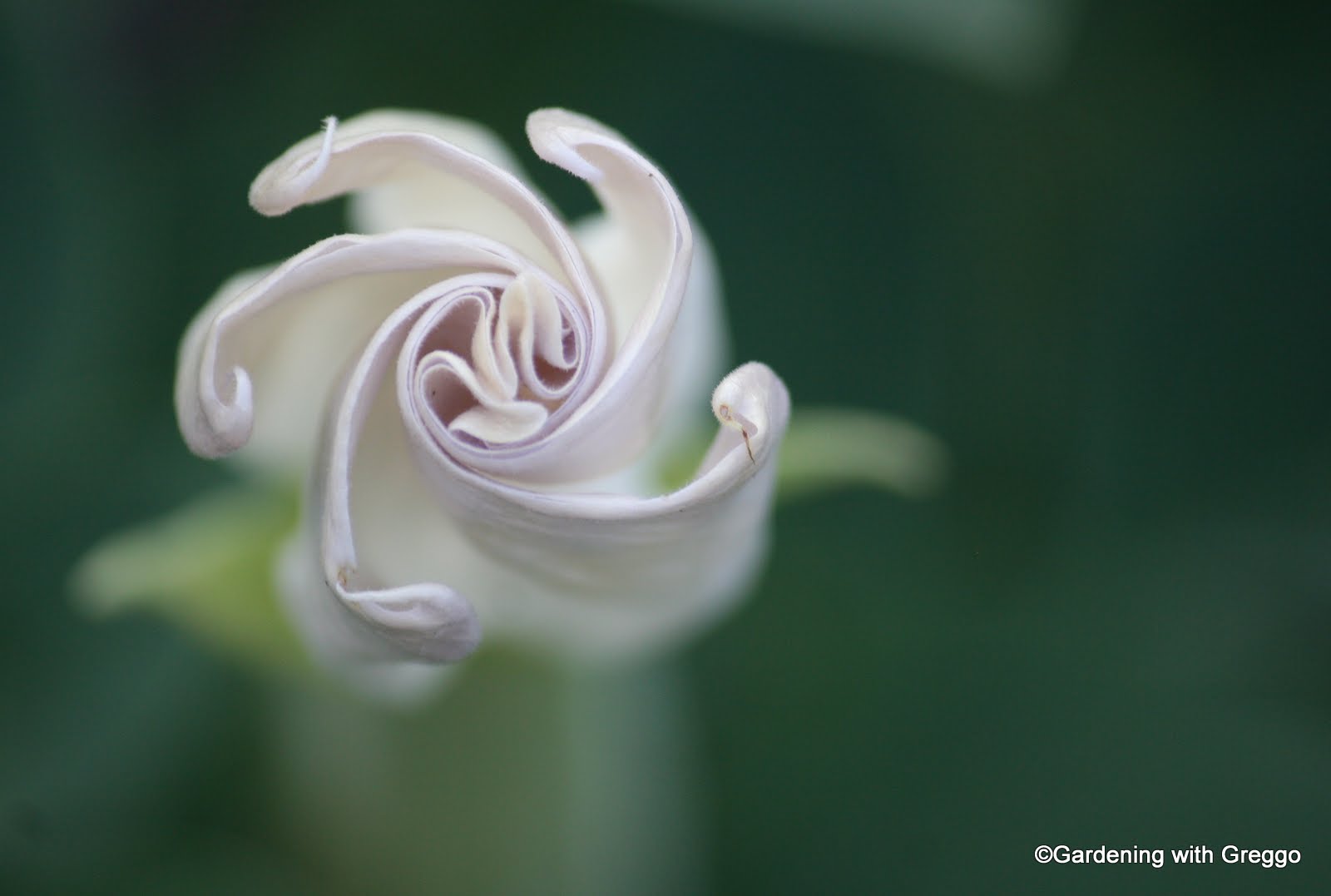
Datura - Moon Flower. What photographer hasn't caputered this frame?
Front bed landscape. Dried blooms of Achillea millifolium, Echinacea purpurea, Artemisia 'Powis Castle" and Salvia farinacea. Happy Bloom Day, You'all!


Friday, September 7, 2012

Cheyenne Botanical Gardens

Another Botanical Garden post, this one from beautiful Wonderful Wyoming. This visit occurred on my visit to Casper ,Wyoming to visit my mother. I will post also as I return going back home as my camera battery died on this trip.
As I was contemplating from home on what to share about this garden in the capital of Wyoming, I had just received my first magazine copy of The American Gardener. The American Gardener is the magazine of the American Horticultural Society which I had just received as a new member. (By the way there is a nice article from Thomas Rainer (grounded design) titled Cottage Garden, American Style).
On page 13 there is a call for Nominations for the Great American Gardeners Awards and also a portrait of last year's Professional Award given to Shane Smith, Director, Cheyenne Botanic Garden. So obviously this garden is award winning. Read here about the history of this exceptional garden. So let's proceed.
Main walking Entrance to Cheyenne Botanical Gardens
 The "horns" are made of welded horseshoes and nearby there is a plaque with descriptions of different horseshoe hoof prints. The motif is very unique. This entrance is across the street from  the "Grand Daddy of them All" Cheyenne Frontier Rodeo grounds. This is also the pedestrian entrance to the gardens xeriscape demonstration gardens. As there is little parking near this entrance, I usually approach the garden from the parking lot near the garden greenhouses. 
For some reason xeriscape gardens have always been a draw to me. Maybe I'm just a xero-head or have a lack of water in the brain. I just enjoy the shades of gray green foliage of many xeric plants and their often unique, out of the ordinary aesthetic properties in contrast to many common garden plants prevalent in our suburban american landscapes. And of course many of these plants survive the hostile environmental conditions they thrive survive in. Many do well in the harsh Kansas plains that I garden in. The low grass above is a native species of buffalograss with milkweed seedlings interspersed. Behind the sign is a Ephedra equisetina-Bluestem joint-fi(more photos to come), Nepeta-catmint and Gallardia-Blanket Flower. Pathways are generous and well positioned, even thought the pink transition strip is a little bold. 
 If you read the Wikipedia write up on the garden you know that the gardens are maintained by a large group of volunteers and city park employees.
A xericscape cottage garden. Love those Alcea-Hollyhocks so prevalent in the Rock Mountain Regions.
Alcea-yellow hollyhock, Achillea millifolium, some form of Penstemon I believe, Echinacea purpurea, Perovskia atriplicifolia-Russian Sage, and others.
Stachys macrantha 'Robusta'-Big Betony
'Next Winters Bread' by David Alan Clark-In the pioneer vegetable garden.
But my favorite gardens are the prairie gardens in the xeriscape area.
Castilleja linariaefolia-Indian Paint Brush (Wyoming State Flower), Verbena stricta -Wooly Verbena , Hesperaloe, Panicum and surrounded by buffalo grass.
 Verbena stricta
Aclepias asperula - Antelopehorn Milkweed
Asclepias and Fallugia above.
Another shot of the Ephedera in the background.
And on of my favorites below. Apache Plume-Fallugia paradoxa below. Wow.