Monday, October 3, 2011

Xeriscape Post San Antonio - Part Three

This is part three of the tour of the San Antonio Botanical Gardens Xeriscape Demonstration Gardens. Part one dealt with the Manicured Xeriscape Garden and a typical traditional American Garden: Part One.
Part two demonstrates my favorite example of xeriscape - The Hill Country Landscape Garden: Part Two.
Click on those links to read those previous posts.
After reading the comments on the first post, Pam Penick from Digging fame left me a link of a past visit to these gardens by her and other fellow Austin bloggers. I will leave a link back here. Watersaver Lane
It was cool to go back and look at these gardens when they were "young". They have matured since this 2007 post. Also she gave me the name of the series of gardens, Watersaver Lane. Thank you Pam!

The fourth garden is the cottage garden: photo above. As you can see there is a nice transition from the Hill Country motif to a cottage garden motif. The cedar rail fence delineates the two very well. Also the Datura blends with both gardens.
This is a true cottage garden. Seedlings come up  and grow and are left to mature. Woah, do they grow. This is garden is definelty full.

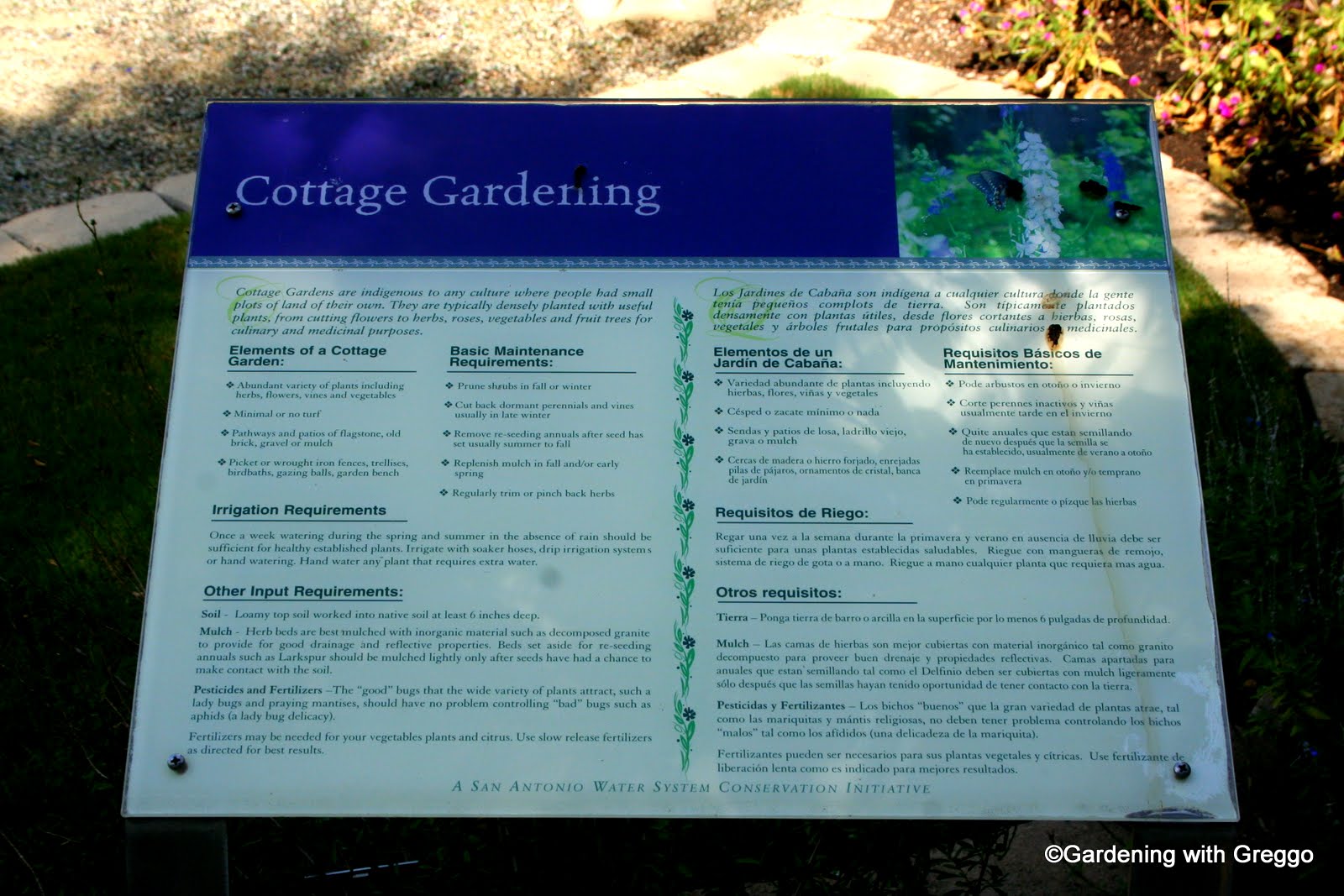
Click on above image to read design elements, water requirements and other input requirements.
The signage fence design consisted of uniquely formed depressed pickets.
 The pathway materials consisted of decomposed granite with recycled and tumbled (to remove sharp edges) glass. Austin bloggers are very familiar with this mulch. Edging material consists of preformed limestone looking concrete uniform brick.
Flowering Pear in background with perennial salvia and bedding annuals.
Typical cottage garden stalwarts positioned in water zones common to their own water requirements. Heirloom roses, mexican mint marigold, artemesia, salvia greggi, shrimp plant and daylilly with Indian Hawthorne hedge among others. And of course reseeding annuals plan a part. An arbor over the front of the "home" distinguishes this garden theme, covered with Confederate jasmine I believe. I can imagine how much color there would be here in the spring and fall. Accessories adorn the theme.
By using plants with the same irrigation requirements we could all conserve much needed water resources. The next post will conclude my visit to Watersaver Lane, click on this link along with Pam's link above to look at more information about these "fun" demonstration themed xeriscape gardens. As Les from A Tidewater Garden put it: Xeriscape is more than Yucca and a sea of gravel, it can present color, texture, variety, and good design. David from The Desert Edge comments often about good and bad xeriscape designed gardens, you may want to visit his New Mexico garden blog site to learn more.
Onward through the fog! lol.


Thursday, September 29, 2011

Xeriscape Post-Again You Ask? Part Two

This is part two of my observations of the xeriscape gardens at the San Antonio Botanical Gardens in July of this year. The previous post explained the first two gardens, the Manicured xeriscape and the traditional non-xeriscape garden. If you would like to review these here is a link: xeriscape post again? part one.

This post entry will explain the third demonstration garden: The Hill Country Landscape. The Hill Country Garden is definitely my favorite, as I wish we could grow some of these plants here. As with the other gardens it has its own unique style and design features as defined by the signage. Click on image to read.
Below is the beginning of the garden, leaving the traditional garden along the decomposed granite path.
Immediately the landscape and composition change from traditional manicured to "Hill Country native" Texas style. Cut native limestone border edging delineates the two gardens. Juniperus ashei (Texas Cedar is a common name) posts compromise the sign fence structure, a nice rustic look. Spineless prickly pear, limestone outcropping boulders, Cercis canadensis var. texensis (Texas Redbud a similar cultivar to Eastern Redbud but more adaptable to the thin calcareous soils of the Texas Hill Country, it also has wavy, leathery leaves to inhibit transpiration and is usually more shrubby and multi-stemmed), Molinia (Beargass) I believe or Mulenbergia compromise the plantings in the above photos.

To the right of the signage is the entrance to the garden. Limestone outcrops and edging. DG pathway with native xeric plants and rustic cedar logs. An inviting entrance indeed.
The right side of the garden includes a wonderfully sculpted mesquite tree with salvia and I believe skullcap. A cedar rail fence delineates this garden from the next: the cottage garden.
But we will stay here a little longer as it is my favorite. View from further out below.
I suppose this isn't everyone's cup of tea. Many would feel it's over grown and messy. Not exactly a traditional suburban example is it?
I believe the plant above is a Grey Sotol (Dasylirion wheeleri) or some form of Dasylirion. It might jump out and bite you here however.
Red yucca, Stipa(mexican feather grass), sage, and prickly pear looking out from building.
Arizona Cypress next to building along with Dwarf Youpon Holly and Turks cap I believe in above photo.
Mahonia trifoliolata(Agarita)foreground with Spineless Prickly Pear and Leucophyllum frutescens(Texas sage,Cenzio).
Unique texture contrast these two. I apologize for not having more photos. However, I think you can understand the jist of this garden. A very small area of turf grass and low water use native plants. Most of these plants have the grayish green color and texture common to xeric plants. The next post will be on the Cottage Garden. Onward.

Wednesday, September 28, 2011

Xeriscape Post-Again You Ask?

I'm sure some of you remember my posts this summer about the Xeriscape demonstration gardens in Colorado Springs. I went on and on about the "rules", points, suggestions, etc., etc. etc. Well for the past two months I've been trying to put together another xeriscape post from the San Antonio Botanical Gardens. The staff there has put together some unique demonstration gardens. They are well planned and installed exhibitions of "themed" gardens. I will start with the  Manicured Xeriscape Landscape Demonstration Garden.
On every garden there is signage explaining the details and management tips on having that type of garden. There is also signage giving the viewer the ability to call a number and listen to a recorded message explaining details of the garden. The signs were pretty dirty with droppings, as most of the staff was too busy hand watering due to the mega drought and probably not able to find much time to do housekeeping. Click on the images to enlarge.
The photo below is a wide angle view of the Manicured Xeriscape. Excuse me about this photo as it was a 108 and just a little bit sunny. The sign from the first photo is the same one on top of the small section of fence. Each garden has a sign with a uniquely designed section of fence below it. This one has a cattle panel section with a contemporary style.
Most of the turfgrass and plants are labeled. The turfgrass is zoysia, and yes that is jasmine ground cover. Many of you probably ask: how can that be xeriscape? Remember one principle is to put like plants together according to their water usage in the same zone. This example is a manicured garden for those who want to save a little more water (Zoysia lawn compared to a Saint Augustine lawn) and jasmine ground cover when once established can take some drought. Also you can allow Zoysia to go dormant as it is a warm season grass and it will recover when it rains. Rain? Well maybe. Once a week irrigation keeps Zoysia green and it can take partial shade. Also this garden has herbaceous perennials planted instead of annuals. Notice the architectural style of the small building. Each garden has their own unique building style.

 Decomposed granite is typical of the pathways leading to the different gardens. DG leads up to this building above with hardscape brick near the stoop. Wouldn't you call this manicured? I believe that is an existing live oak on the left. Shade is an important feature in this garden. Also you are viewing the sign and fence detail on the right which is an example of the next garden.

The traditional lawn. This garden is an example of the traditional American landscape. This is not a xeriscape garden.
I suppose this is not what to do. lol. Click to view the elements of the landscape and maintenance requirements in this region. Notice the high maintnance clipped Photinia foundation planting, Crepe Myrtle in the background, clipped box hedge, Saint Augustine turfgrass and annuals. It's actually a nice looking garden but uses more water to keep it green.
I suppose the only thing missing in this region is a Arizona Ash tree. In other parts of the country these plants would be interchanged with privet, large juniper, bluegrass or fescue turfgrass. The next four gardens will be posted in coming days. These will include The Texas Hill Country garden, the Cottage Garden, the Wildscape garden and the Spanish Courtyard Garden. Remember this tour was in late July this summer, so judge them on how well they look in this drought and what type of plants are being used and how much maintenance and water is being applied to "look" good.


Tuesday, September 20, 2011

Illumination - Word for Wednesday

Dona @ Garden Walk, Garden Talk is hosting a Word for Wednesday. This week it is Illumination. Join the word at Illumination.
 
Illuminate

Wednesday, September 14, 2011

GGBD September

It's that time again: Garden Bloggers Bloom Day. Carol at May Dream Gardens is sponsoring the monthly garden party where everyone brings their own blooms. Join us from around the world.
Salvia fairnacea - Mealy Blue Sage
Mealy Blue Sage, Little Bluestem, Catmint, Yarrow spent blooms, and Dewey Blue Switchgrass
Hell Strip-Annual Zinnia, Edible Sweet Potato, Karl Foerster Grass, Salvia, Yarrow Terra Cotta, Solidago, Liatris ligularis, Sedum Autumn Joy, Peppers and tomatoes in background. Peaking above is Dewey Blue Switchgrass.
Crape Myrtle (don't know variety), Purple Coneflower, Salvia, Flower Carpet Rose Red in background. Datura raising it's hear like a snake.
Yarrow, end of summer.
Boltonia snowbank, Flower Carpet Rose, Aster beginning to bloom. Variegated Miscanthus.
Salvia 'Black and Blue'
What's blooming your way?


Tuesday, September 13, 2011

Late Summer Garden

Gardening Gone Wild's Photo Contest has returned from a two month hiatus. The subject this month is Late Summer Garden. My last post I showed a gallery of photos I thought depicted a late summer garden. This photo was chosen the most often out of eight choices. I have to agree it shows purple coneflowers at the end of their bloom period beginning to set seed which usually takes place at the end of the summer. You can view the contest information and gallery at Gardening Gone Wild.

GGW Late Summer Photo Contest

Glad the photo contest is back after a two month hiatus, as it might reinvigorate my gardening spirit. However, I can't decide what photo to choose. The subject is late summer garden. Can you readers give me some input? Which one best instils this subject and is a quality photo?

 Thanks for you input..